When Your Skin Travels Through Time (Zones)
For those of us who have mastered the obvious, we know that skin behaves differently throughout the day. It may actually look younger in the morning, then progressively duller or more fatigued as the hours wear on.
Today, longevity scientists are, perhaps unintentionally, weighing in on aesthetics and explaining more of what we see in the mirror. Like almost every organ in the body, skin operates according to circadian rhythms. Through the course of roughly 24-hour cycles, these rhythms help coordinate cellular repair, barrier function, inflammatory activity and more. Research suggests that there is a skin-brain connection with skin having its own peripheral clocks that are synchronized, in part, by the brain’s central clock.
With sleep, light exposure, meal timing and stress all affecting internal clocks, it’s no surprise that traveling rapidly across multiple time zones can send them temporarily off course.
Jet-Lagged Skin: What You Get Is What You See
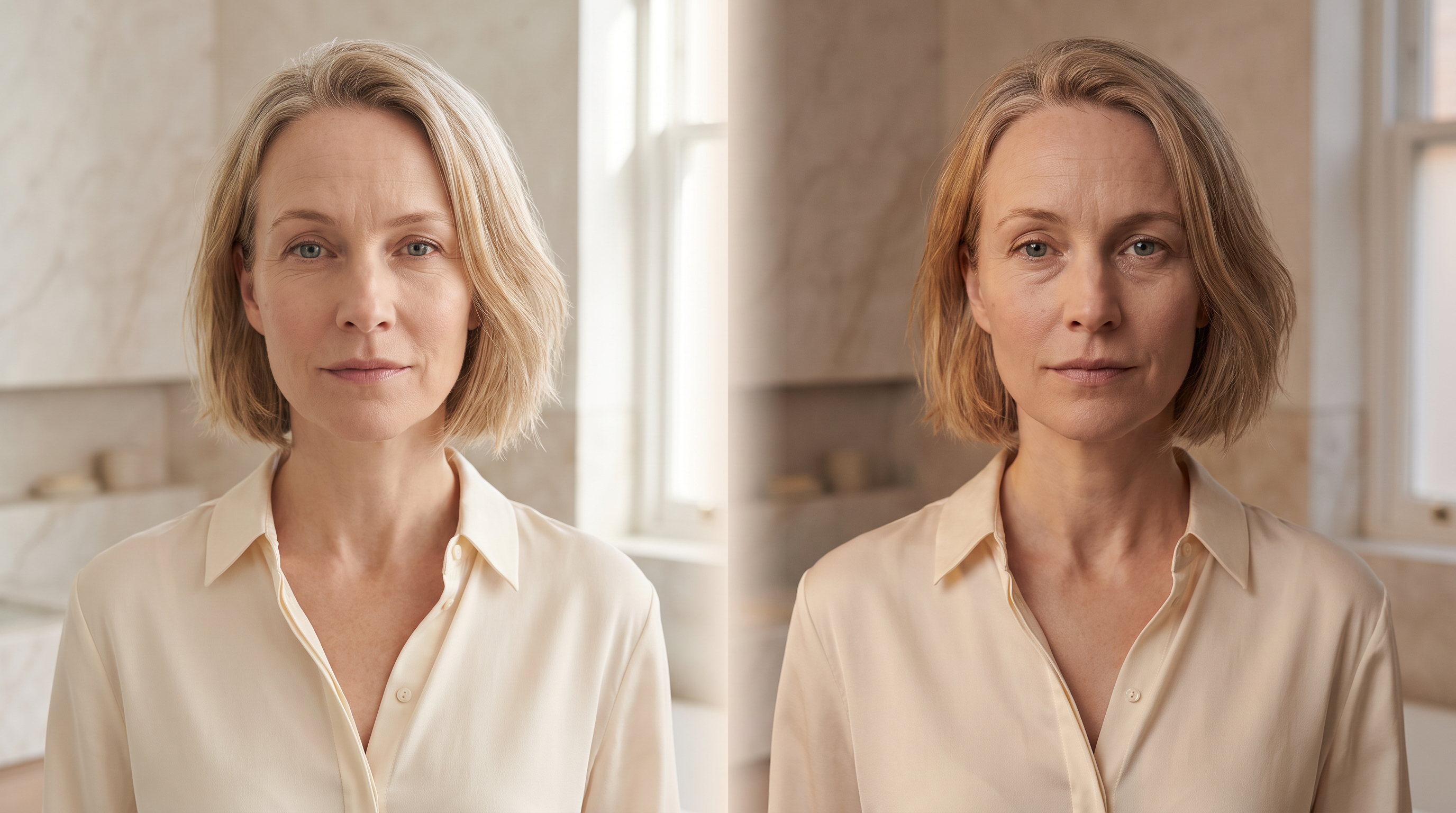
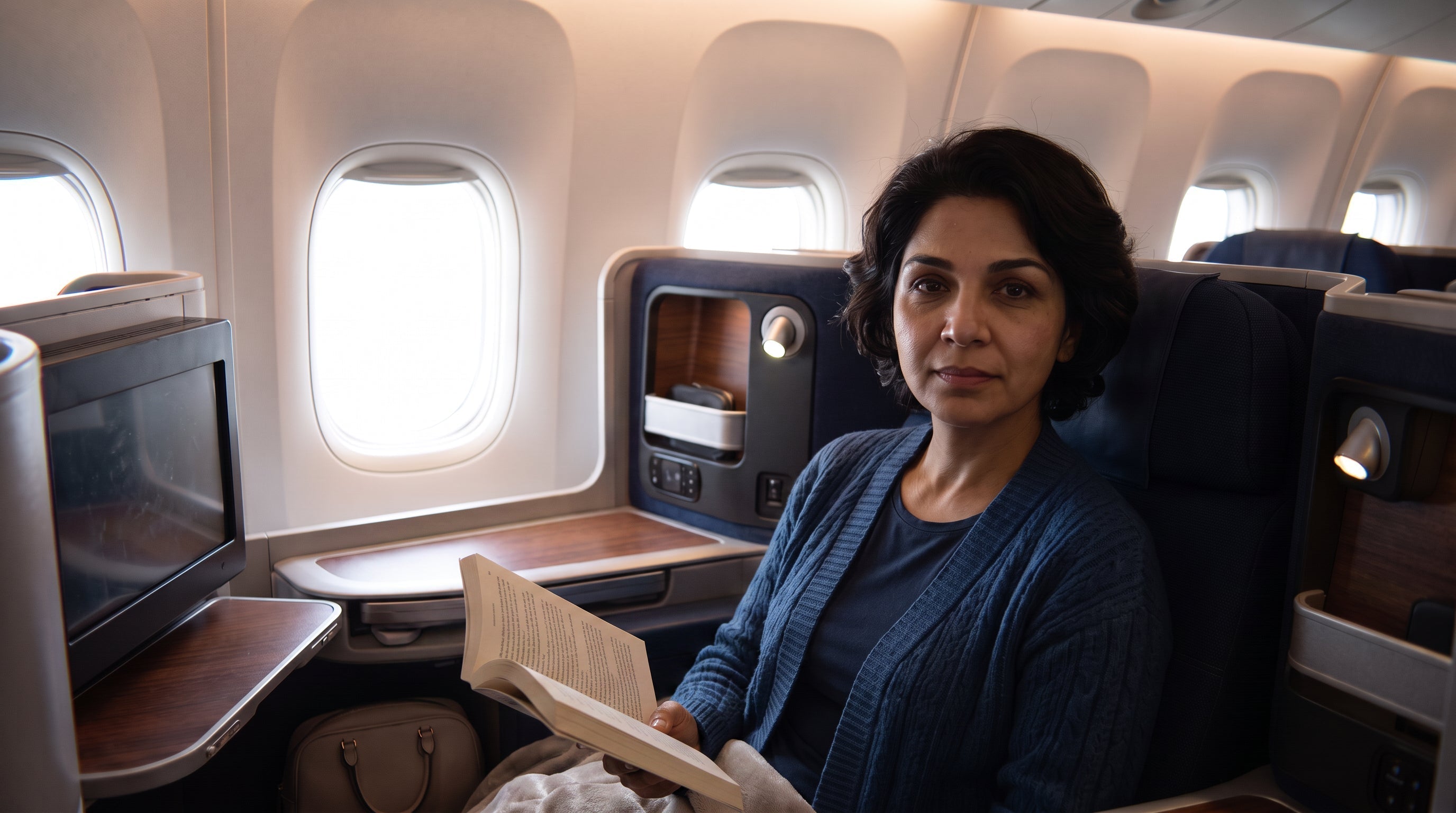
My Oura Ring showed a precipitous plunge in my resilience when I traveled to Europe earlier this year. Just as my biometrics began to find themselves comfortably in France, I hit myself with another circadian whammy on the return to California. Although my wearable suggested that I was fully recovered about a week after arriving home, without intervention, my photo library could have easily been a permanent reminder of the effect of my travel on my skin. I had scored a comfortable business class seat, but upon landing my face looked like I had been forced to travel in cargo.

We know that some biomarkers used in studies of biological aging fluctuate according to the time of day. In newer studies, cells appear to be youngest around midnight and older around midday. Depending on the epigenetic clock used, the apparent difference reached several years.
Now that does not mean we literally age several years between breakfast and lunch. But it does reinforce just how rhythmically our biology operates.
So, what exactly is “jet-lagged skin”?
It isn’t a medical diagnosis. It is a useful description for the collection of visible changes that can follow a long-haul flight: dryness, dullness, puffiness, more pronounced lines, uneven tone and all that comes with a body that thinks it is 3 a.m.
The good news is that jet-lagged skin is usually temporary. The less-good news is that cameras have no respect for recovery time.
Helping Your Skin Catch Up with You
The smartest travel skincare strategy begins before takeoff and continues after landing.
Protect the barrier. Avoid harsh treatments containing strong acids, bleaches or retinoids. Instead, support barrier resiliency with a serum rich in humectants and adaptogens. A facial mist may feel refreshing, but mist alone can evaporate quickly and leave skin feeling even drier unless it is followed by something that seals in moisture.
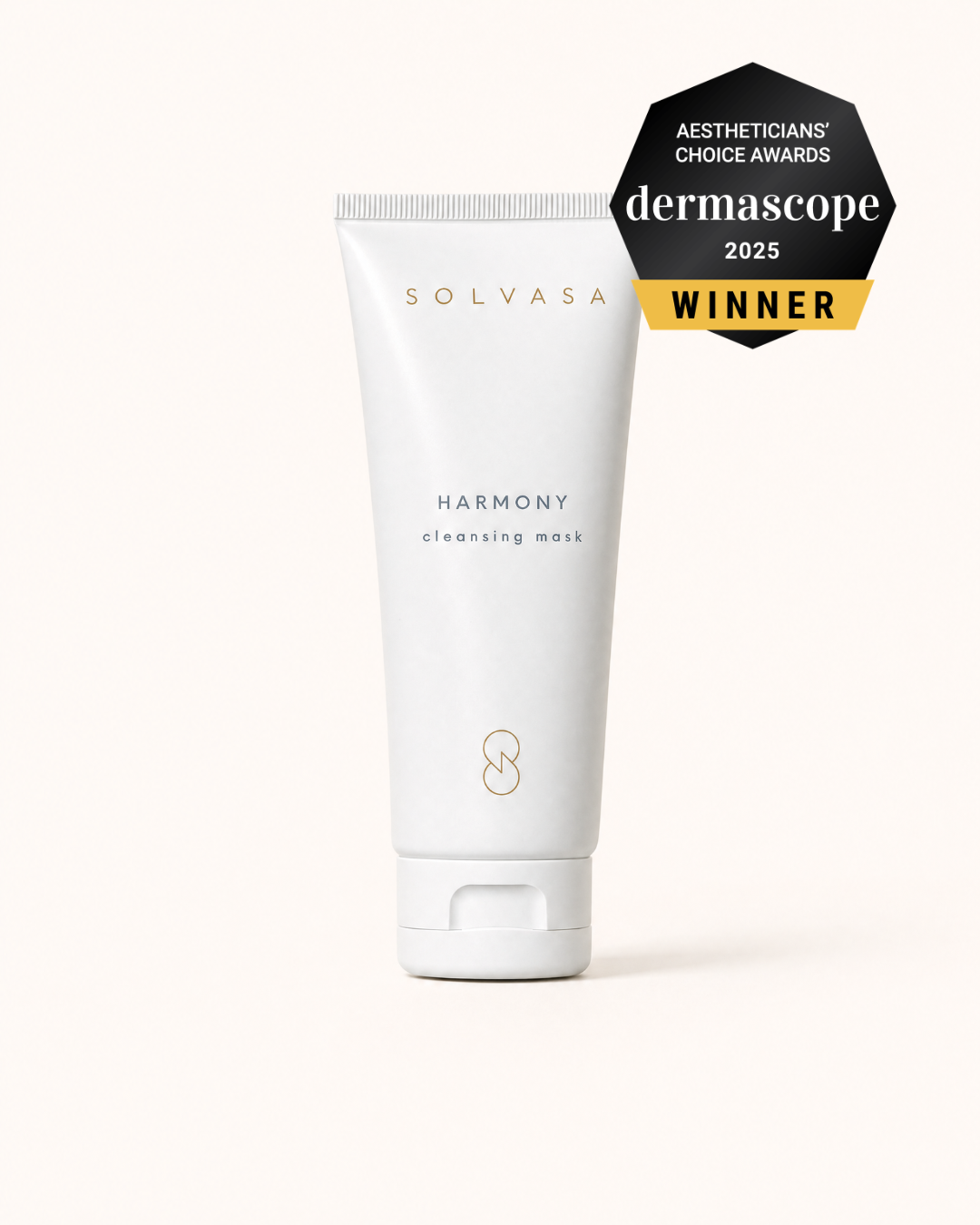
Keep cleansing gentle. This is not the moment for aggressive exfoliation or peels. Travel-stressed skin generally benefits from a kinder, gentler approach.
Move when you can. Walking the aisle, stretching and changing position periodically support circulation and may help reduce the “everything is puffy” feeling upon arrival.
Use light to reset your master clock. Appropriately timed daylight is one of the strongest signals for shifting circadian timing. Morning light is generally helpful after eastward travel, although the ideal timing depends on the direction and number of time zones crossed. Eating and sleeping according to local time a couple days before you depart can also help if you’re up for it.
Hydrate sensibly. Drinking water is important, particularly if you are consuming alcohol, but it cannot single-handedly counteract low cabin humidity or cure jet lag. Your skin still needs topical barrier support.
Create an arrival ritual. A few minutes of mindful breathing, gentle facial massage and intentional skincare can reduce the sense of being physiologically off-kilter. It also gives the face and the mind a clear message: we have arrived.

Neurocosmetics to the Rescue
Neurocosmetics is an emerging area of skincare based on the two-way communication between the skin and the nervous system. Skin is not simply your body’s window dressing. It continuously exchanges signals with the brain through neurological, hormonal and inflammatory pathways that are often referred to as the skin–brain axis.
Neurocosmetic rituals and products are designed to influence the visible consequences of stress through practices and ingredients that interact with pathways involved in skin sensitivity, inflammation or barrier function. Incorporating sensorial mindful experiences such as breathing, aromatherapy or massage can help transform skincare from a perfunctory task into a calming ritual.
This is an exciting field, but it is still emerging. “Neurocosmetic” does not automatically mean that a product changes the brain, lowers cortisol or treats anxiety. The most supportable promise is more grounded: thoughtfully formulated skincare and mindful touch may help calm the appearance of stress-affected skin while creating a ritual that feels calming to the person using it.
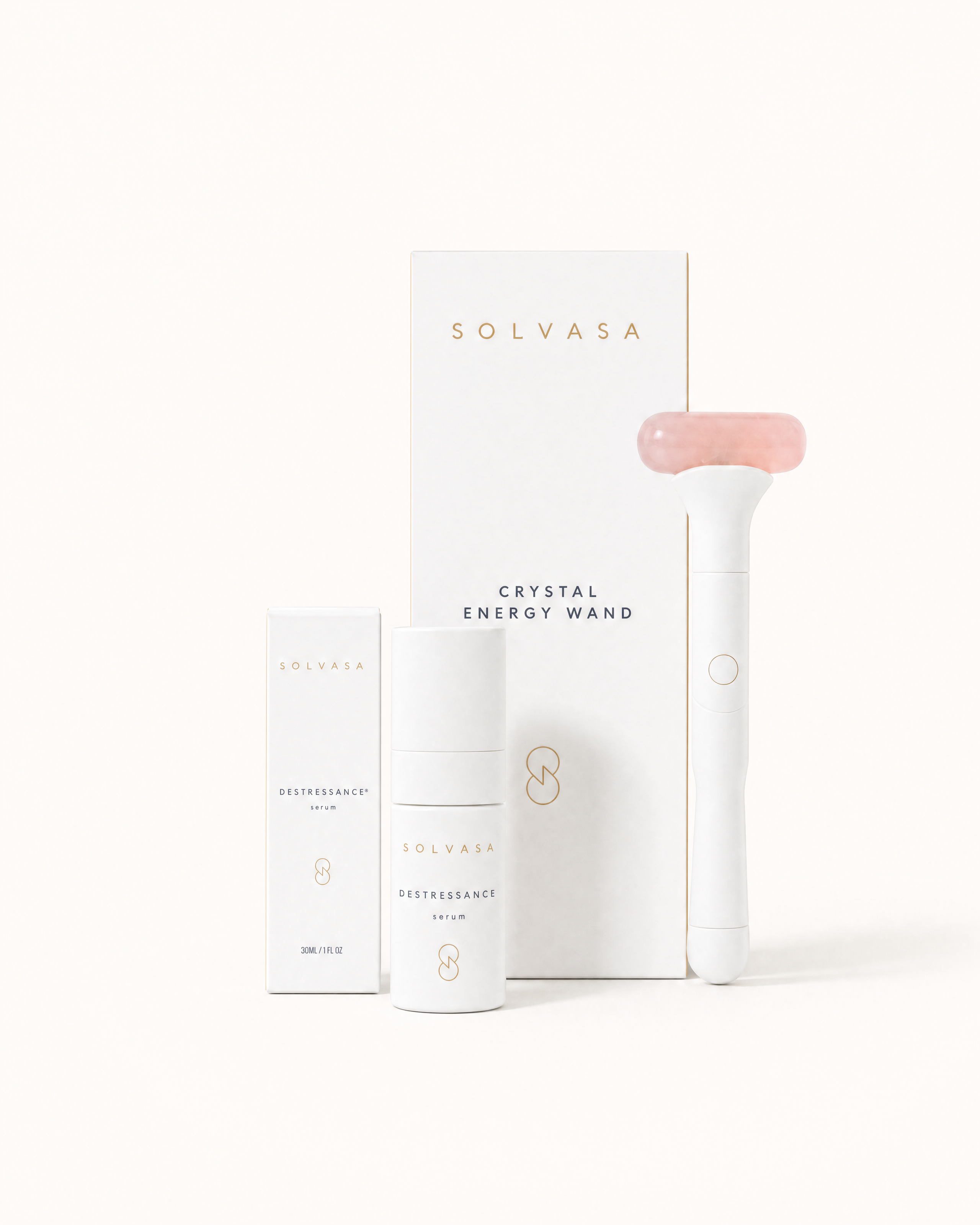
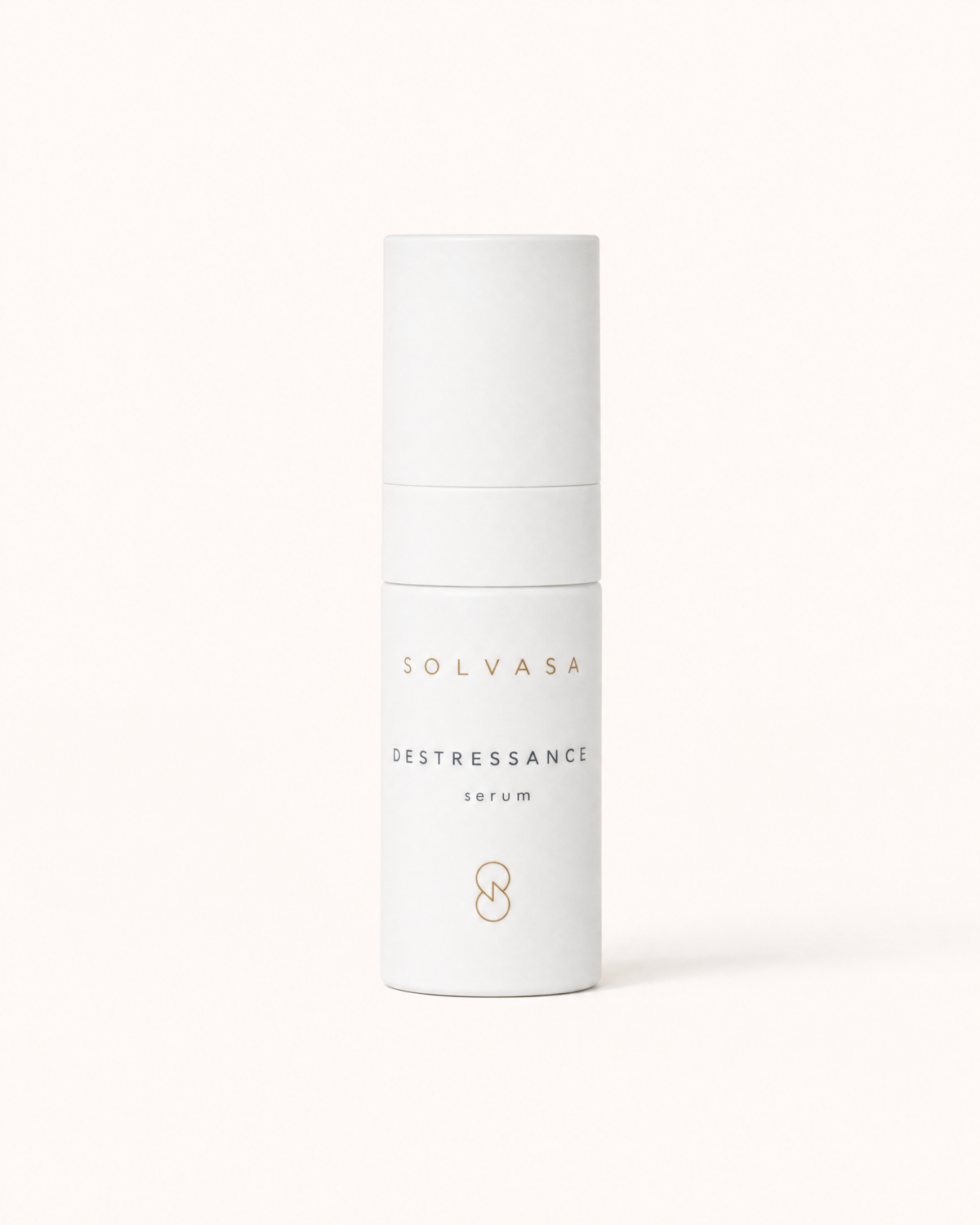
That is the idea behind Solvasa’s Crystal Energy Wand and DeStressance Serum.
The serum provides slip for massage while delivering hydrating ingredients, including glycerin, sodium hyaluronate and squalane, along with peptides and botanical extracts to support recovery of stressed-looking skin. The cooling rose-quartz wand adds gentle vibration and guided facial massage.
Used together, they can help in several immediate, practical ways:
- The serum hydrates and temporarily plumps the skin, helping soften the appearance of dehydration lines.
- The cooling stone can feel soothing and help temporarily reduce the look of puffiness.
- Gentle facial massage may support local circulation and the movement of superficial fluid, helping the face look fresher and more defined.
- Massage can help release the tension we unconsciously hold in the brow, jaw and forehead … tension that becomes especially noticeable after hours in a cramped airline seat.
- The three-minute practice turns skincare into a sensory cue to pause, breathe and reconnect with the present moment.
The Crystal Energy Wand cannot reset your circadian clock, that job belongs largely to light, sleep and time. But it can help address some of what jet lag leaves written on your face while giving your nervous system a gentler way to arrive.

Beauty in Your Presence®
Time travel, at least the commercial-airline version, may never be completely glamorous. But as an ‘intentional optimist’ I love the way it reminds us about how adaptable we are. Our circadian rhythms recalibrate. Our skin barrier recovers. The puffiness passes. And eventually, our faces catch up with the adventure.
So, take the trip. Cross the time zones. Collect the photographs, even the ones that reveal exactly how many hours you have been awake. With a little science, a little self-care and three mindful minutes, you can help your skin find its way home.
Because the best travel skincare strategy isn’t to arrive untouched by the journey. It is to arrive beautifully present for it.